|
Septic Tanks - What they are, how they work
There are a lot of different types of domestic septic tank systems, and we can only cover the basic types here. The specific type of septic tank you have, and the manner of its construction will vary massively depending on its age, where it is, and who it was that installed it originally. The majority of septic tanks were installed long before there was any oversight by building regulations, and even after legislation was brought in to control the type and manner of septic system installation, many tanks were fitted without much referral to the rules governing such installations.
Even though specialists who know how to correctly build a drainage system have been in business since Roman times, a lot of septic tank systems in the UK were originally built by the same builders who built the rest of the property it is attached to. While this doesn't mean that the builder didn't know what he was doing, the septic tank is likely to not be noticed if something is wrong. |
|

A modern EPP2 Biotec shown in the ground
|
Unlike most other aspects of the property, where anything not built properly will be quickly noticed and rectified (leaking roof, poorly fitted doors or windows, etc) a badly made septic tank can go for years until the inevitable happens. Unfortunately, when it does go wrong, it tends to go wrong catastrophically.
Traditionally, septic tanks were built from bricks or blocks or constructed from sections of concrete, typically featuring three chambers. The drainage from the house discharges into the first chamber, which in turn feeds into the second chamber. In these two chambers the sewage is left to settle, leaving solid waste to float on top, and heavy sediment to sink to the bottom of the tank. The use of the pipes (dip and 'h' pipes) allows the water to pass from one chamber to the next without bringing the separated solids with it. Finally the water in the tank passes into the last chamber. This is a filtration tank, filled with a 'filter media' that ensures that only cleaned water is released from the tank. Although you may find examples built from clay, metal, or even wood, sometimes just what the builder had to hand. Today, septic tanks are made from fibre glass or, more commonly, sturdy plastics.
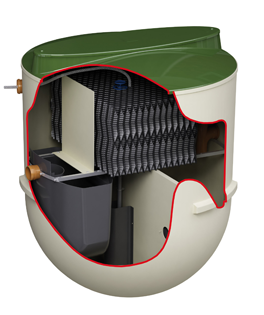
A modern EPP2 Biotec septic tank |
Unfortunately, many systems are built with a single holding chamber which flows directly into a filter media, this doesn't clarify the waste sufficiently to ensure that it is fit for release into the wider environment. Others may feature two separate chambers for waste to settle, but with no filter chamber, which again doesn't do the job properly. There are even some properties with no tanks at all. No chambers to let the waste separate, no filter media to further clean the waste, just a straight discharge into the environment, typically rivers or brooks. Should these be discovered they usually attract the attention of the Environment Agency, as this sort of system has been prohibited since Victorian times.
A working septic tank system will effectively separate solids and other waste waste from the water. The waste mostly forms a crust on the surface of the tank, this is processed to some degree by bacteria present in the system, and residual enzymes present in the waste. Domestic sewage treatment systems are available these days which process the waste to a much greater degree, breaking the waste down far more than a traditional septic tank. Whichever system you opt for, the tank will require someone with a big tanker pumping all of the left over waste matter and sediment out of the tank. |
|
|


